Modular, digital, sustainable – why the future of industrial manufacturing is impossible without worker assistance systems

Industrial manufacturing is facing a profound transformation. Global megatrends such as electromobility, hydrogen technologies, circular economy, and increasingly rapid product development pose enormous challenges for companies. Manufacturing systems must become more flexible, more connected, and more sustainable – all while meeting rising demands for quality and efficiency.

In this environment, modular production systems and digital worker assistance systems are gaining increasing importance. Those who want to master this transformation need partners who understand both: digital process management and the construction of suitable assembly workstations and lines.

1. The New Demands on Manufacturing

Modularity Instead of Rigid Production Lines

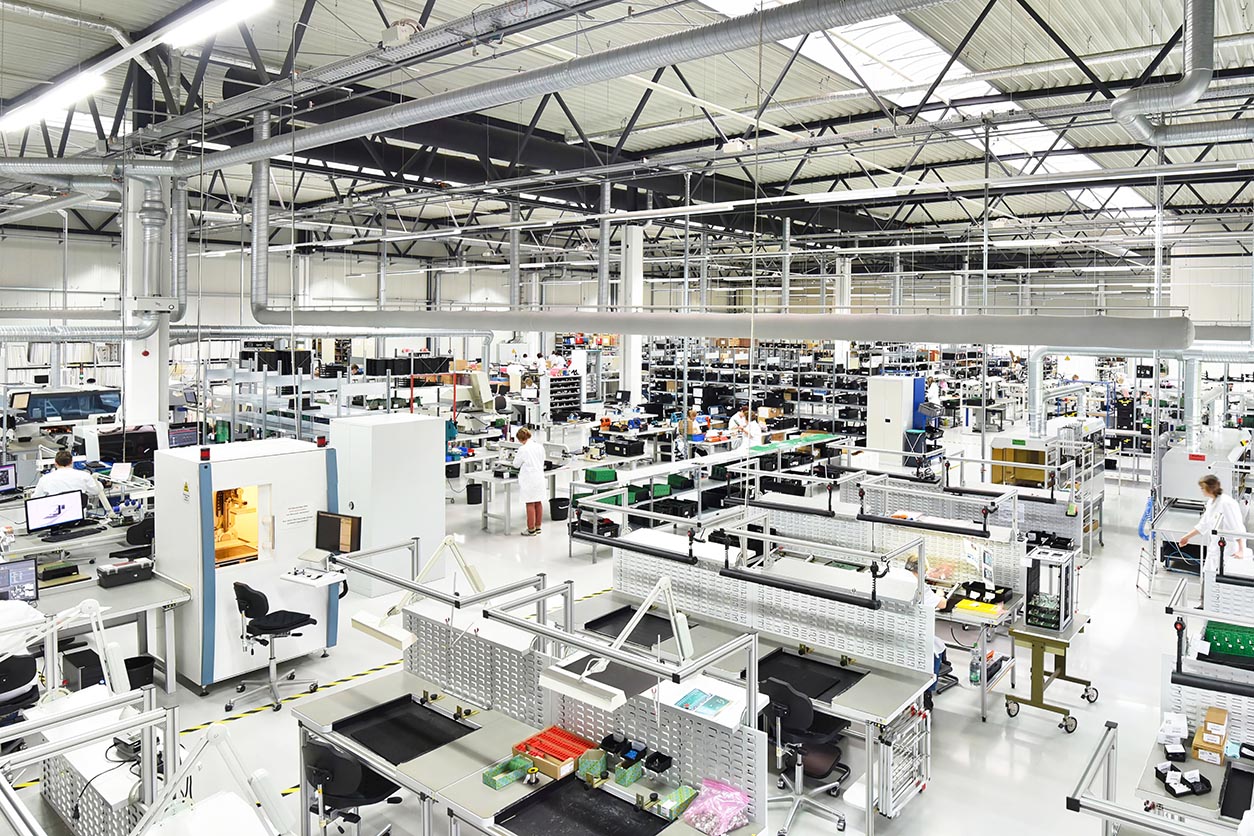
Traditional, fixed assembly lines are reaching their limits. Product variety, shorter product lifecycles, and new technologies demand manufacturing facilities that can be quickly reconfigured.

Modular workstations make it possible to flexibly combine, expand, or rearrange production steps – without extensive modifications.

Digitalization as Standard

The connected factory is no longer a vision of the future, but a lived reality. Digital assistance systems control work steps, record process data, and create transparency – in real time. Integration into existing ERP or MES systems is crucial to make information consistently available throughout the entire company.

Sustainability & Resource Efficiency

Political regulations, customer expectations, and cost awareness are driving the demand for resource-efficient production. This means: reducing waste, minimizing energy consumption, and designing processes so they can become part of a circular economy.

2. Worker Assistance Systems as Key Technology

In manual and semi-automatic assembly, humans continue to play a central role. However, the demands for precision, documentation, and flexibility are higher than ever.

This is where worker assistance systems like ELAM come into play.

  • Guided Work Steps: 
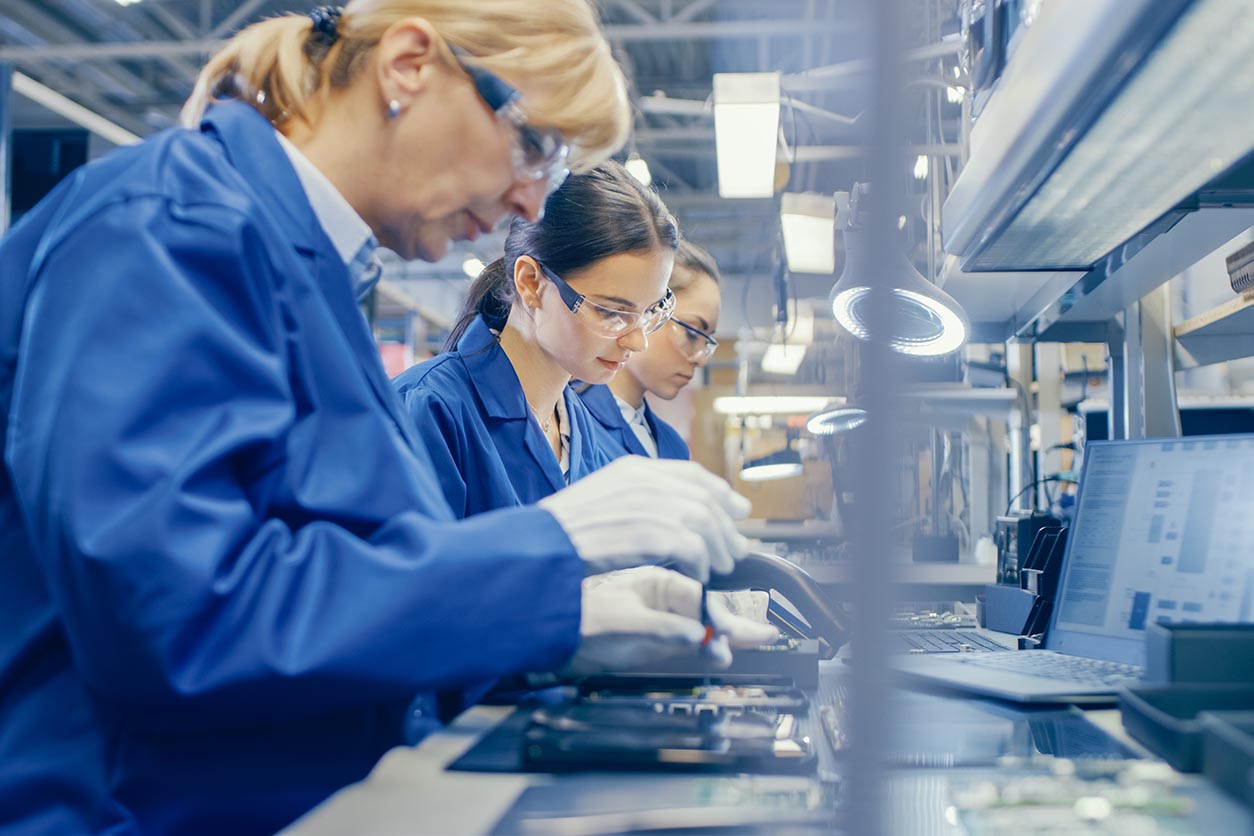
ELAM shows employees exactly which steps need to be performed in what order – supported visually, textually, or multimodally.
  • Error Prevention & Quality Assurance: Integrated checks and sensor queries prevent assembly errors and ensure seamless traceability.
  • Quick Changeover for Product Changes: New work instructions can be implemented within minutes – ideal for modular production concepts.
  • Integration into Factory IT: ELAM can be connected to ERP, MES, and quality management systems to centrally evaluate data and use it for continuous improvements.

In short: ELAM connects people with the digital factory – making them a central, connected part of the production system.
3. The Role of Armbruster Engineering

Even the best software only achieves its full potential when perfectly combined with the right hardware. This is precisely where Armbruster Engineering comes in.

  • Planning & Design of Modular Workstations: Our assembly workstations are designed to be quickly adapted or expanded – both mechanically and in terms of software.
  • Complete Assembly Lines: From planning and development to commissioning, we deliver complete solutions for manual and semi-automatic assembly processes.
  • Customization: Every industry, every product, and every customer comes with unique requirements. Our strength lies in developing tailored concepts that work both today and tomorrow.
  • Connected Systems: We view hardware and software as a single unit – ELAM can be seamlessly integrated into our workstations, ensuring a consistent operating and data concept.

4. Practical Examples for the Future of Manufacturing

  • Electromobility: When assembling battery modules or power electronics, precision is crucial – ELAM guides the worker step-by-step, checks results, and automatically documents them.
  • High-Mix-Low-Volume Production: In industries with high product variety and low production volumes, modular workstations and rapid software updates enable economical manufacturing.
  • Sustainable Production: By reducing waste, optimizing material usage, and digitally streamlining processes, production becomes more resource-efficient.

5. Conclusion – Future Viability Requires Partners with System Understanding

The industrial manufacturing of the future is modular, digital, and sustainable.

Worker assistance systems like ELAM are not just helpful tools, but key technologies for meeting market demands while optimally supporting employees.

Armbruster Engineering offers the complete package: from digital process management and modular workstation design to the delivery of complete assembly lines.

This makes us a partner who not only reacts to trends – but makes them actionable for our customers.

Outlook: Companies that invest in modular workstations and digital assistance systems today not only gain competitive advantages but also secure their future viability in a rapidly changing industry.
Neueste Beiträge

In many productions, incoming goods, intralogistics, assembly and shipping are still organized as separate islands. The ELAM production system links these areas into an integrated worker assistance system — with uniform digital work instructions and a consistent flow of data from ERP to the individual workplace.
Weiterlesen...
Anyone establishing digital processes on the shop floor today will sooner or later face the central question: "Can I really run my production data in the cloud?"
Weiterlesen...

Nächste Termine

02

-

03

.

06

2026

all about automation

Messe
|
Hamburg
The all about automation trade fair in Hamburg is the meeting point for industrial automation professionals in the North. Discover innovative solutions and talk to us about modern worker assistance systems – at stand 571.
Mehr erfahren...

09

-

11

.

06

2026

User Meeting

Veranstaltung
|
Darmstadt
The ninth ELAM User Meeting will take place in June. Many new features, exciting presentations, and interesting discussions all about our ELAM software await you there. More information coming soon!
Mehr erfahren...

06

-

08

.

10

2026

SCB Expert Days Nuremberg

Veranstaltung
|
Nürnberg
Engage with experts and, in small groups, experience the complete control cabinet manufacturing cycle: "From digital to physical"
Mehr erfahren...